
Teacher side-hustle lists are usually padded with "drive for Uber" filler. This one is ranked by three things that actually matter for educators: does it use skills you already have, does it fit around a school schedule, and can it grow beyond trading hours for dollars? Earnings below are typical reported ranges — your results depend on time invested and, frankly, on how smartly you pick your niche.
The list at a glance
| Side hustle | Startup cost | Schedule fit | Scales beyond your hours? |
|---|---|---|---|
| 1. Selling on Teachers Pay Teachers | $0 | Fully async | Yes — products sell while you teach |
| 2. Online tutoring | $0 | Evenings/weekends | No — hourly |
| 3. Curriculum writing for companies | $0 | Project-based | No — per project |
| 4. Teaching English online | $0 | Early mornings | No — hourly |
| 5. Test scoring & exam grading | $0 | Seasonal bursts | No |
| 6. Selling digital products on Etsy | Small (listing fees) | Fully async | Yes |
| 7. Teacher blogging / YouTube | Small | Fully async | Yes — slow build |
| 8. Summer school & camps | $0 | Summer only | No |
| 9. Online course creation | Small | Fully async | Yes |
| 10. Freelance writing & editing | $0 | Flexible | No — per piece |
| 11. Instructional coaching | $0 | Flexible | Partly |
| 12. Exam proctoring | $0 | Scheduled shifts | No |
1. Selling on Teachers Pay Teachers — the one that builds an asset
Every other hustle on this list trades hours for money. Selling your teaching resources on TPT is different: you make a resource once — something you may already have sitting in your Google Drive — and it can sell for years. That's why it's #1 despite being slower to start: months one and two are quiet, but the work compounds.
It's also the hustle with the least new learning: you already know what a good resource looks like, what teachers struggle to find, and what units eat your prep time. The skill you don't have yet is picking what to make — and that's a data problem, not a talent problem. Teachers search TPT in remarkably predictable patterns:
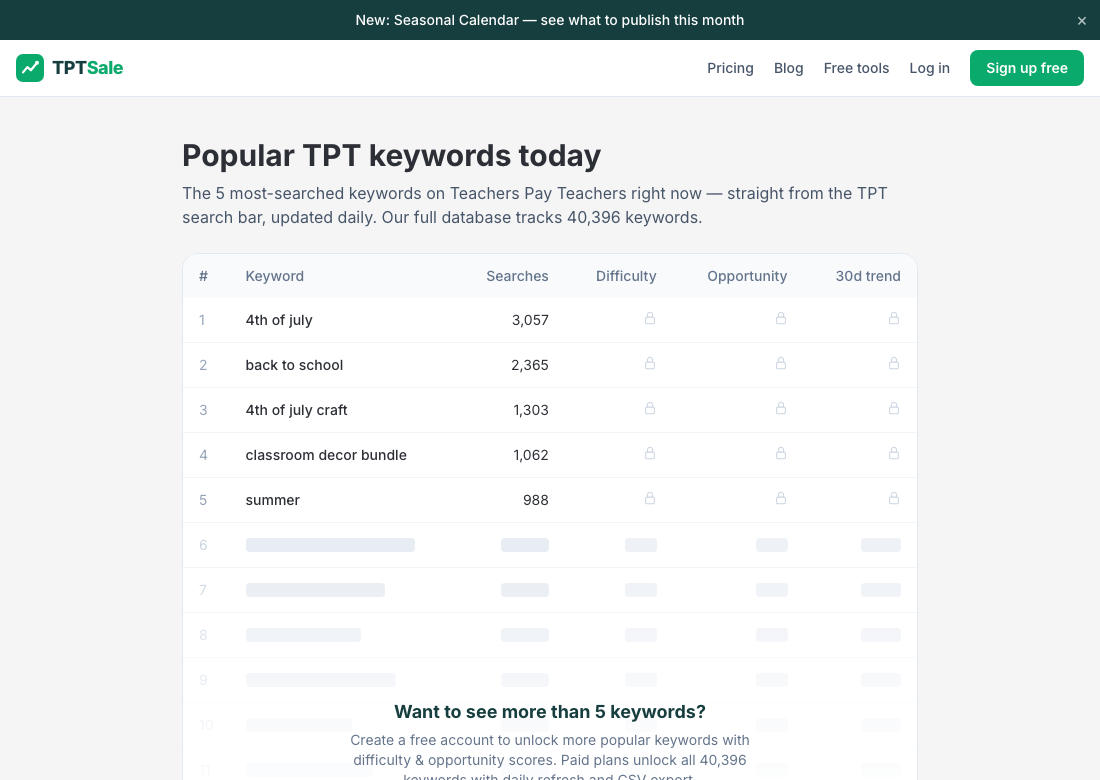
Start smart instead of guessing: check what's being searched, pick a phrase with real demand and weak page-one competition (our keyword research guide shows exactly how), verify your title matches real searches with the free title checker, and time your launch with the seasonal calendar. Realistic expectations matter — see what TPT sellers actually make — but this is the only entry on this list where December's work still pays you next December.
2. Online tutoring
The fastest path to extra money: platforms and private clients pay roughly $20–60+/hour depending on subject and level, with test prep at the top. Zero startup cost and evening-friendly, but every dollar costs an hour — there's no compounding.
3. Curriculum writing for education companies
Publishers and edtech companies pay teachers to write lesson content, assessments and teacher guides, typically per project. Great pay for strong writers, and it sharpens exactly the skills that make a good TPT store later. Find openings on education job boards and company career pages.
4. Teaching English online
Steady demand from adult learners and international students; pay is commonly in the $10–30/hour range depending on platform and credentials. Early-morning time zones pair oddly well with teacher schedules.
5. Test scoring and exam grading
Companies like the big assessment providers hire educators seasonally to score standardized exams from home. Modest hourly pay, but reliable, brainless-after-day-job work in defined windows (spring especially).
6. Selling digital products on Etsy
Planners, printables and templates for a general audience. It works, but educational products face fees and a crowded, generalist search — we compared the two marketplaces in detail in our Etsy vs TPT guide. Rule of thumb: educational products → TPT; general-audience printables → Etsy.
7. Teacher blogging or YouTube
The slowest build on the list (6–18 months to meaningful income via ads, affiliates and sponsorships), but it scales and pairs beautifully with a TPT store — most six-figure TPT sellers run a blog or channel that feeds their store.
8. Summer school and enrichment camps
Districts and private programs pay solid daily rates, and it's contained to weeks you choose. The opportunity cost: summer is also when TPT sellers build their back-to-school catalog — the year's biggest sales wave.
9. Online course creation
Package your expertise for other teachers or for students (platforms or your own site). Higher effort and marketing burden than TPT — you bring the audience — but strong margins once it sells.
10. Freelance writing and editing
Education blogs, textbook supplements, grant writing. Teachers are better writers than they think; rates rise fast with a portfolio. Per-piece income, no compounding.
11. Instructional coaching and consulting
Experienced teachers coach newer ones, consult for schools, or run PD workshops. High hourly value, but demand is network-driven — best after 8–10 years in the classroom.
12. Exam proctoring
Online proctoring shifts are low-stress and scheduled, at modest hourly pay. A filler hustle: fine for gap income, no growth.
How to choose
Need money this month? Tutoring (#2) or test scoring (#5). Building income that outlasts the effort? TPT (#1), optionally amplified later by a blog (#7). The honest play many teachers run: tutor for cash flow now, publish one well-researched TPT resource a month, and let the asset side grow until it doesn't need you daily. If you go the TPT route, start with the free keyword data or a free TPTSale account — picking the right first product is the single highest-leverage decision you'll make.
Earnings ranges are typical reported figures and vary widely by region, experience and time invested. Nothing here is a guarantee of income.